Home / Blogs / Fertility Tourism in India — Expertise, ...
← All Blogs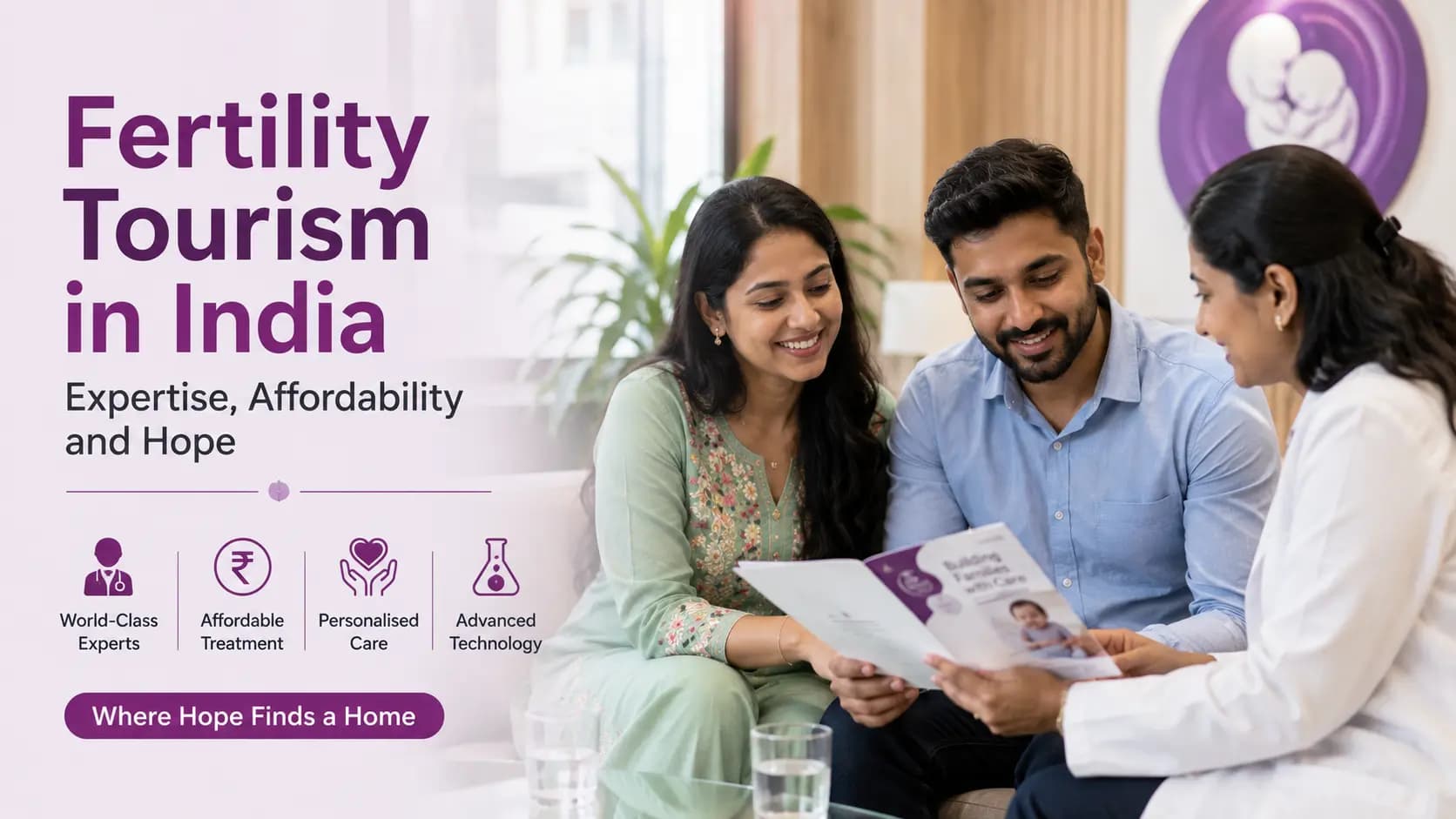
Fertility Tourism in India — Expertise, Affordability and Hope
Fertility tourism in India is not merely a healthcare trend — it is a human story shaped by longing, resilience, and the universal desire to build a family.
For countless individuals and couples navigating infertility, the journey toward parenthood is emotionally charged, financially demanding, and often overwhelming. In this landscape, India has become a destination where advanced reproductive science meets compassion, cultural sensitivity, and accessibility.
Why India Is Emerging as a Global Fertility Tourism Hub
Over the last decade, India has steadily positioned itself as a preferred destination for international fertility care. It draws patients from Southeast Asia, the Middle East, Africa, Europe, and the global Indian diaspora. What makes India stand out is not a single factor. Instead, it is a powerful combination of affordability, clinical excellence, and a healthcare culture that understands the emotional weight of infertility.
The Cost Advantage of Fertility Tourism in India
India’s cost advantage remains one of its strongest differentiators. In many Western and Asian countries, the price of a single IVF cycle can be prohibitive. As a result, many families delay treatment or abandon it altogether. India, however, offers the same procedures — sometimes even more advanced ones — at nearly one-third of global prices.
This affordability does not reflect compromised standards. Rather, it stems from lower operational costs, high patient volumes, and a competitive private healthcare ecosystem. For many international patients, India represents the difference between “we cannot afford to try” and “we finally have a chance.”
Clinical Excellence and Advanced Technology
Affordability alone does not explain India’s rise. India’s fertility specialists are among the most experienced in the world. Many trained internationally and now lead high-volume clinics that sharpen their expertise further. Embryology labs across major Indian cities use cutting-edge technologies such as AI-assisted embryo selection, time-lapse incubators, PGT-A, and vitrification.
Consequently, India now stands on par with global leaders in reproductive medicine. This blend of skill and innovation has earned India a strong reputation for delivering clinical outcomes — even in complex cases.
Cultural and Logistical Accessibility for International Patients
Another reason India attracts fertility travellers is its cultural and logistical accessibility. English-speaking medical teams, visa-friendly policies, and international patient coordinators make the process smoother for those arriving from abroad. Furthermore, for patients from Asia, Africa, and the Middle East, India offers a sense of cultural familiarity — a feeling of being understood, not just treated.
In a journey where emotions often run high, this comfort matters deeply.
India’s Regulated Donor Ecosystem
India’s regulated donor ecosystem further strengthens its global appeal. Under the ART Act (2021), donor programs follow strict guidelines on age, medical screening, genetic testing, and psychological evaluation. This structure ensures ethical practices and transparency. As a result, international patients feel confident in the safety and integrity of the process.
In many countries, donor availability is limited or prohibitively expensive. India, therefore, offers a medically supervised and accessible alternative.
Economic Impact of Fertility Tourism in India
Economically, fertility tourism has become a significant contributor to India’s healthcare sector. Major cities like Mumbai, Delhi, Chennai, Hyderabad, Bengaluru, and Pune have evolved into fertility hubs attracting thousands of international patients each year. Moreover, this growth has fuelled investments in medical infrastructure, research, and global healthcare partnerships.
Challenges India Must Address
India’s rapid rise also brings responsibility. While the ART Act and Surrogacy Regulation Act have introduced much-needed structure, consistent enforcement remains essential. Variations in state-level oversight, occasional inflated success rate claims, and uneven lab accreditation standards highlight the need for stronger regulatory vigilance.
Ultimately, sustaining global trust requires India to strike a balance between growth and integrity, innovation and ethics, and accessibility and accountability.
The Human Side of Fertility Tourism in India
What truly distinguishes India is the emotional dimension of its care. Patients often describe Indian fertility clinics as places where they feel seen, heard, and supported. Doctors take time to explain, reassure, and walk alongside patients through the highs and lows of treatment. In a process that can feel isolating, India offers a sense of partnership.
India’s rise as a global fertility tourism hub is ultimately a story of hope. It is the story of people crossing borders — not for luxury, but for the chance to hold a child. It is the story of a country that has combined affordability, expertise, and empathy in a way few others have.
Here, fertility care is not just a treatment. It is a journey shared — a journey where hope finds a home, and where the dream of parenthood becomes possible for families across the world.