Home / Blogs / Gamete Donation in India: Why Awareness ...
← All Blogs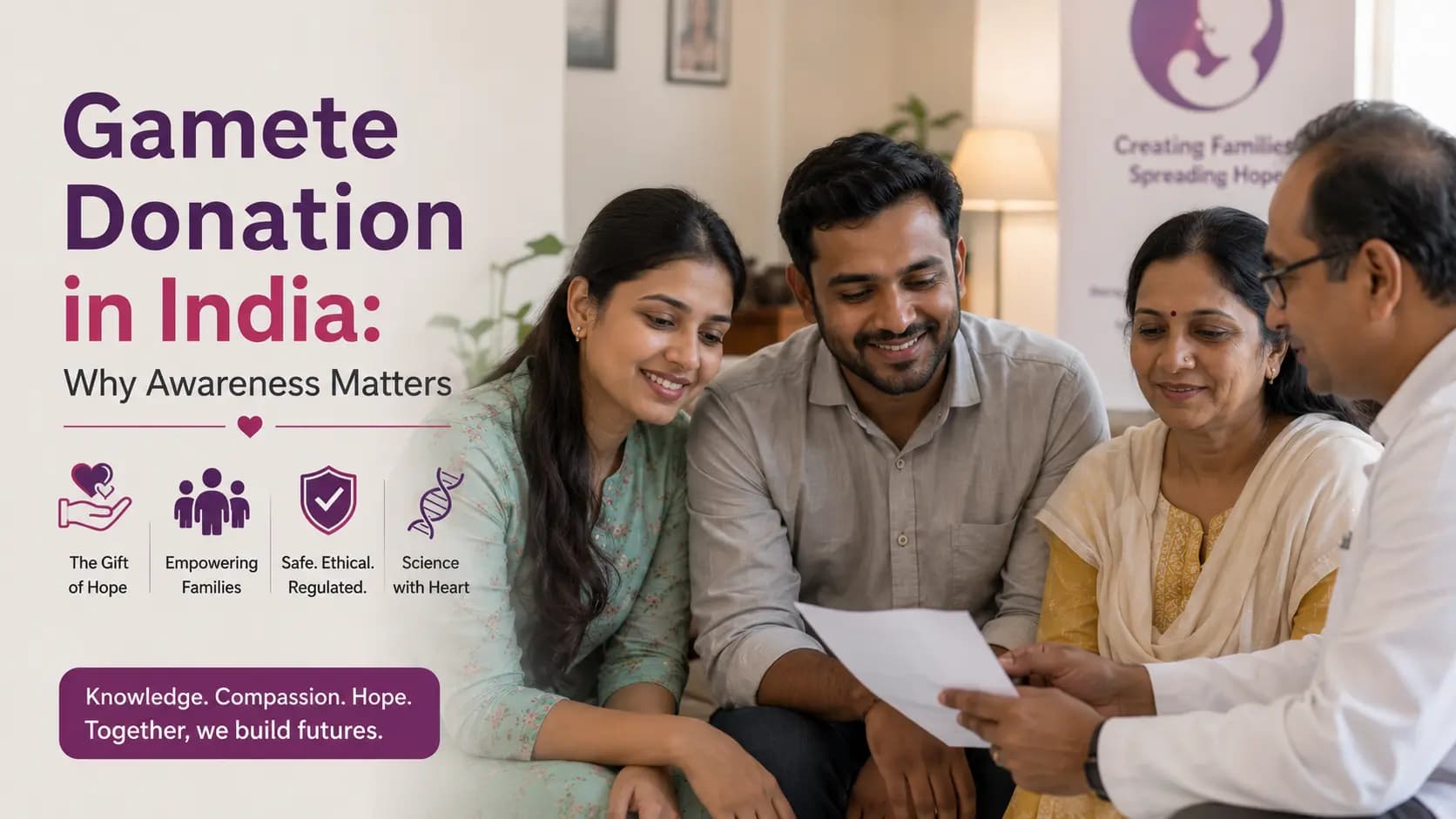
Gamete Donation in India: Why Awareness Matters
Gamete donation in India has become an important option for individuals and couples facing infertility. Despite advances in reproductive medicine, conversations around infertility and donor-assisted conception are often avoided, leading to confusion, stigma, and misinformation.
For many people, gamete donation offers a pathway to parenthood when natural conception is not possible. Understanding the legal framework, medical process, and emotional aspects of gamete donation is essential for making informed decisions.
What Is Gamete Donation?
Gamete donation refers to the use of donated sperm or eggs when an individual or partner is unable to produce viable gametes. It is a well-established medical practice that has helped countless families achieve their dream of parenthood.
In India, the regulations surrounding gamete donation have evolved significantly, making it important to understand current laws and guidelines rather than relying on outdated information.
Gamete Donation in India: The Legal Framework
Gamete donation in India is regulated under:
- The Assisted Reproductive Technology (ART) Act, 2021
- The Surrogacy (Regulation) Act, 2021
- Amendments introduced in 2023 and 2024
These regulations aim to ensure ethical practices, prevent exploitation, and protect the rights of donors, intended parents, and children born through assisted reproductive technologies.
The 2024 Amendment and Gamete Donation in India
The 2024 amendment introduced important changes regarding the use of donor gametes in surrogacy.
Key provisions include:
- One donor gamete is permitted in surrogacy when medically necessary and certified by the District Medical Board.
- At least one gamete must come from the intending couple.
These changes provided greater flexibility for couples facing genuine medical challenges while maintaining ethical safeguards.
Why Society Still Hesitates
Despite legal clarity, social stigma surrounding infertility and donor conception continues to exist. Many individuals worry about judgement, misconceptions, and societal expectations.
However, parenthood is built through love, care, and emotional connection. A child conceived through donor gametes is no less loved or valued than any other child.
Common Myths About Gamete Donation
Several misconceptions continue to influence public perception.
- Myth: A donor-conceived child will not feel like part of the family.
Fact: Family bonds are created through nurturing, love, and shared experiences. - Myth: Gamete donation is unsafe.
Fact: Donors undergo thorough medical, genetic, and psychological screening. - Myth: Gamete donation is something to be ashamed of.
Fact: Open conversations help reduce stigma and promote understanding. - Myth: Gamete donation is illegal in India.
Fact: Gamete donation is legal and regulated under the ART framework.
Why Awareness About Gamete Donation in India Matters
Awareness plays a crucial role in helping individuals and couples understand their reproductive options. Accurate information can replace fear and uncertainty with confidence and clarity.
Awareness helps:
- Empower informed decision-making
- Reduce infertility-related stigma
- Encourage ethical and transparent practices
- Protect donors and intended parents
- Support the dignity of children born through ART
The Human Side of Gamete Donation
Behind every fertility treatment is a deeply personal story. For some, gamete donation represents hope after years of unsuccessful treatments and emotional challenges.
It is not a compromise or a shortcut. It is an opportunity created through medical science, compassion, and generosity.
By encouraging open conversations and greater awareness, society can help create an environment where individuals feel supported in their journey to parenthood without fear, judgement, or stigma.