Home / Blogs / Hysteroscopy in Fertility Treatment: Wha...
← All Blogs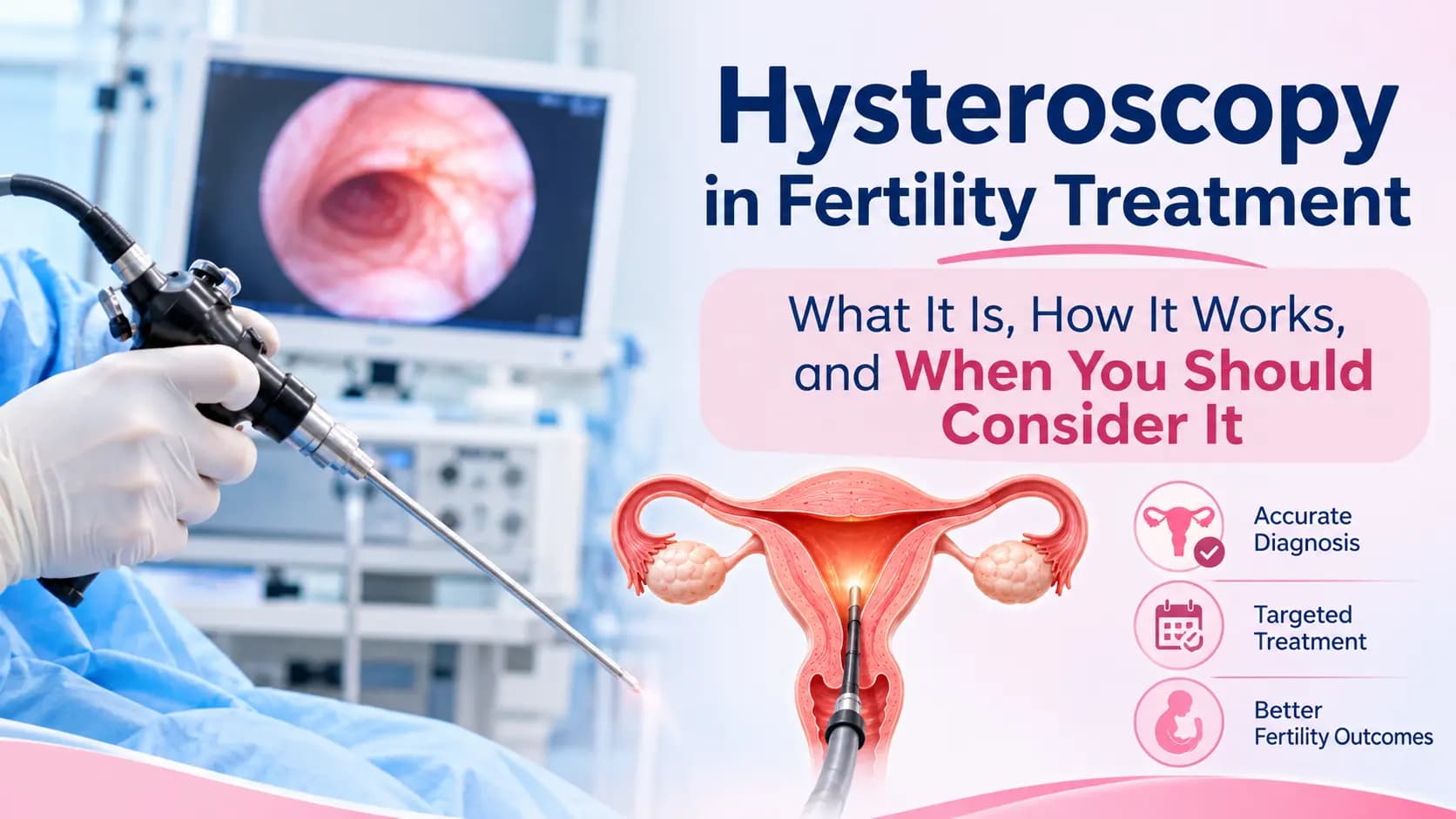
Hysteroscopy in Fertility Treatment: What It Is, How It Works, and When You Should Consider It
What if one simple procedure could help uncover hidden abnormalities inside the uterus that routine scans may miss?
When it comes to fertility, a healthy uterus is just as important as healthy eggs, sperm, and embryos. While ultrasound scans provide valuable information, they cannot always reveal subtle uterine conditions that may interfere with implantation, pregnancy, or IVF success. This is where hysteroscopy plays a significant role.
Hysteroscopy is a minimally invasive procedure that allows fertility specialists to directly examine the inside of the uterus and, when necessary, treat abnormalities during the same procedure. Whether a woman is experiencing infertility, recurrent pregnancy loss, abnormal uterine bleeding, or repeated IVF failures, hysteroscopy can provide crucial insights and help optimise reproductive outcomes.
Today, hysteroscopy is considered one of the most valuable diagnostic and therapeutic tools in reproductive medicine, helping countless women move one step closer to achieving a successful pregnancy.
What Is Hysteroscopy?
Hysteroscopy is a procedure that involves inserting a thin, telescope-like instrument called a hysteroscope through the cervix into the uterine cavity. The hysteroscope contains a high-definition camera and light source, allowing the doctor to view the inside of the uterus in real time.
Unlike traditional surgery, hysteroscopy does not require abdominal incisions. The procedure is typically performed as a day-care procedure and involves minimal discomfort and recovery time.
Through hysteroscopy, fertility specialists can closely examine:
- The uterine cavity
- Endometrial lining
- Cervical canal
- Openings of the fallopian tubes
- Structural abnormalities inside the uterus
Most importantly, it allows doctors to both diagnose and treat certain conditions during the same procedure.
How Does Hysteroscopy Work?
During the procedure, the hysteroscope is gently passed through the vagina and cervix into the uterus. A sterile saline solution is used to expand the uterine cavity, providing a clear view of the uterine walls.
The specialist can then identify abnormalities such as:
- Uterine polyps
- Fibroids
- Uterine septum
- Scar tissue
- Adhesions
- Endometrial abnormalities
- Retained products of conception
If treatment is required, specialised instruments can be passed through the hysteroscope to remove or correct these abnormalities immediately.
This combination of diagnosis and treatment makes hysteroscopy highly efficient and valuable in fertility management.
Why Is Hysteroscopy Important for Fertility?
Successful pregnancy depends on the embryo implanting and growing within a healthy uterine environment.
Even when embryos are of excellent quality, implantation may fail if there is an underlying uterine abnormality.
Hysteroscopy helps identify conditions that may:
- Prevent implantation
- Reduce IVF success rates
- Cause recurrent miscarriages
- Affect endometrial receptivity
- Disrupt normal uterine function
By correcting these issues, hysteroscopy may improve fertility outcomes and increase the chances of achieving a healthy pregnancy.
Conditions That Hysteroscopy Can Diagnose and Treat
1. Uterine Polyps
Endometrial polyps are growths that develop within the uterine lining.
They may:
- Interfere with embryo implantation
- Cause irregular bleeding
- Affect fertility
Hysteroscopy allows precise removal of polyps while preserving healthy uterine tissue.
2. Uterine Fibroids
Fibroids are benign growths that develop from the muscular wall of the uterus.
Submucosal fibroids, which protrude into the uterine cavity, can significantly affect fertility and pregnancy outcomes.
Hysteroscopic removal may help:
- Improve implantation rates
- Reduce miscarriage risk
- Enhance IVF success
3. Uterine Septum
A uterine septum is a congenital condition in which a partition divides the uterine cavity.
This abnormality has been associated with:
- Infertility
- Recurrent pregnancy loss
- Poor reproductive outcomes
Hysteroscopic septum resection can effectively restore a normal uterine cavity.
4. Intrauterine Adhesions (Asherman’s Syndrome)
Scar tissue inside the uterus can develop following infections, surgeries, or dilation and curettage (D&C) procedures.
These adhesions may:
- Prevent implantation
- Cause menstrual abnormalities
- Increase infertility risk
Hysteroscopy is considered the gold standard for diagnosing and treating intrauterine adhesions.
5. Recurrent Implantation Failure
Women undergoing IVF who experience repeated failed embryo transfers may benefit from hysteroscopic evaluation.
The procedure can identify subtle abnormalities that may not be visible on ultrasound, allowing corrective treatment before future embryo transfers.
When Should You Consider Hysteroscopy?
Your fertility specialist may recommend hysteroscopy if you have:
- Unexplained infertility
- Recurrent implantation failure
- Recurrent miscarriages
- Thin endometrium
- Abnormal uterine bleeding
- Suspicious ultrasound findings
- Prior uterine surgery
- History of intrauterine adhesions
- Failed IVF cycles
The procedure is often performed before IVF to ensure the uterine cavity is optimally prepared for embryo implantation.
Should Hysteroscopy Be Done Before IVF?
One of the most common questions patients ask is whether hysteroscopy is necessary before IVF.
The answer depends on individual circumstances.
Many women proceed directly to IVF without requiring hysteroscopy. However, fertility specialists may recommend it when:
- Previous IVF cycles have failed
- Ultrasound findings are abnormal
- There is a history of miscarriage
- Uterine pathology is suspected
- Implantation problems are suspected
For selected patients, hysteroscopy can help identify hidden factors affecting IVF success and support a more personalised treatment strategy.
How Many Times Can Hysteroscopy Be Performed?
There is no fixed limit on the number of times hysteroscopy can be performed.
The procedure may be safely repeated when medically necessary.
A patient may undergo hysteroscopy:
- For initial diagnosis
- After surgical correction of abnormalities
- To monitor healing
- Before additional IVF cycles
- Following recurrence of symptoms
Repeated hysteroscopies are generally avoided unless there is a clear clinical indication.
Your fertility specialist will determine whether a repeat procedure is beneficial based on your individual circumstances and fertility goals.
Is Hysteroscopy Painful?
Diagnostic hysteroscopy is often associated with minimal discomfort and may be performed with little or no anaesthesia.
Operative hysteroscopy, which involves treatment of abnormalities, may be performed under sedation or anaesthesia depending on the complexity of the procedure.
Most women report mild cramping similar to menstrual discomfort, which usually resolves quickly.
Recovery After Hysteroscopy
Recovery is typically rapid.
Most patients can:
- Return home the same day
- Resume routine activities within 24 to 48 hours
- Experience minimal pain
- Resume fertility treatment shortly afterwards if advised
Some women may experience mild cramping or light spotting for a few days following the procedure.
Benefits of Hysteroscopy in Fertility Care
Hysteroscopy offers several advantages:
- Minimally invasive procedure
- No abdominal incision
- High diagnostic accuracy
- Simultaneous diagnosis and treatment
- Faster recovery
- Improved uterine assessment
- Potential improvement in IVF outcomes
- Better identification of implantation-related issues
For fertility specialists, it remains one of the most effective ways to evaluate uterine health.
Frequently Asked Questions (FAQs)
What is the difference between hysteroscopy and laparoscopy?
Hysteroscopy examines the inside of the uterus through the cervix, while laparoscopy examines the pelvic organs through small incisions in the abdomen.
Does hysteroscopy improve fertility?
Hysteroscopy itself is primarily a diagnostic and corrective procedure. By treating uterine abnormalities, it may improve fertility and pregnancy outcomes in certain patients.
Is hysteroscopy necessary before IVF?
Not always. It is generally recommended when there are symptoms, abnormal findings, recurrent IVF failures, or suspected uterine abnormalities.
How long does a hysteroscopy procedure take?
Most diagnostic procedures take between 10 and 30 minutes. Operative procedures may take longer depending on the treatment required.
Can uterine polyps be removed during hysteroscopy?
Yes. Hysteroscopy allows fertility specialists to precisely remove uterine polyps during the same procedure.
Is hysteroscopy safe?
Hysteroscopy is considered a safe and commonly performed procedure. Complications are uncommon when performed by experienced specialists.
Can hysteroscopy detect problems missed by an ultrasound?
Yes. Small polyps, adhesions, scar tissue, and other subtle uterine abnormalities may sometimes be detected more accurately through hysteroscopy.
How soon can IVF be started after hysteroscopy?
The timeline depends on the findings and treatment performed. Many patients can proceed with fertility treatment within a few weeks after the procedure.
Creating the Best Environment for Pregnancy
A successful pregnancy starts with a healthy uterine environment. While advanced fertility treatments such as IVF can help overcome many reproductive challenges, implantation and pregnancy depend on the uterus being ready to receive and nurture an embryo.
Hysteroscopy offers fertility specialists a direct window into uterine health, allowing them to identify and address conditions that may otherwise remain hidden. Whether used to investigate infertility, improve IVF outcomes, or reduce the risk of recurrent pregnancy loss, this minimally invasive procedure can provide valuable answers and meaningful opportunities for treatment.
For many women, hysteroscopy is not just a diagnostic procedure. It is an important step towards clarity, confidence, and ultimately, parenthood.
Ready to Take the Next Step?
If you are struggling with infertility, recurrent miscarriages, failed IVF cycles, or abnormal uterine findings, a comprehensive fertility assessment can help determine whether hysteroscopy may benefit your treatment plan.
Book your consultation with our fertility specialists today and take a proactive step towards understanding your fertility, optimising your uterine health, and moving closer to your dream of parenthood.