Home / Blogs / IVF Failed: What Should You Investigate ...
← All Blogs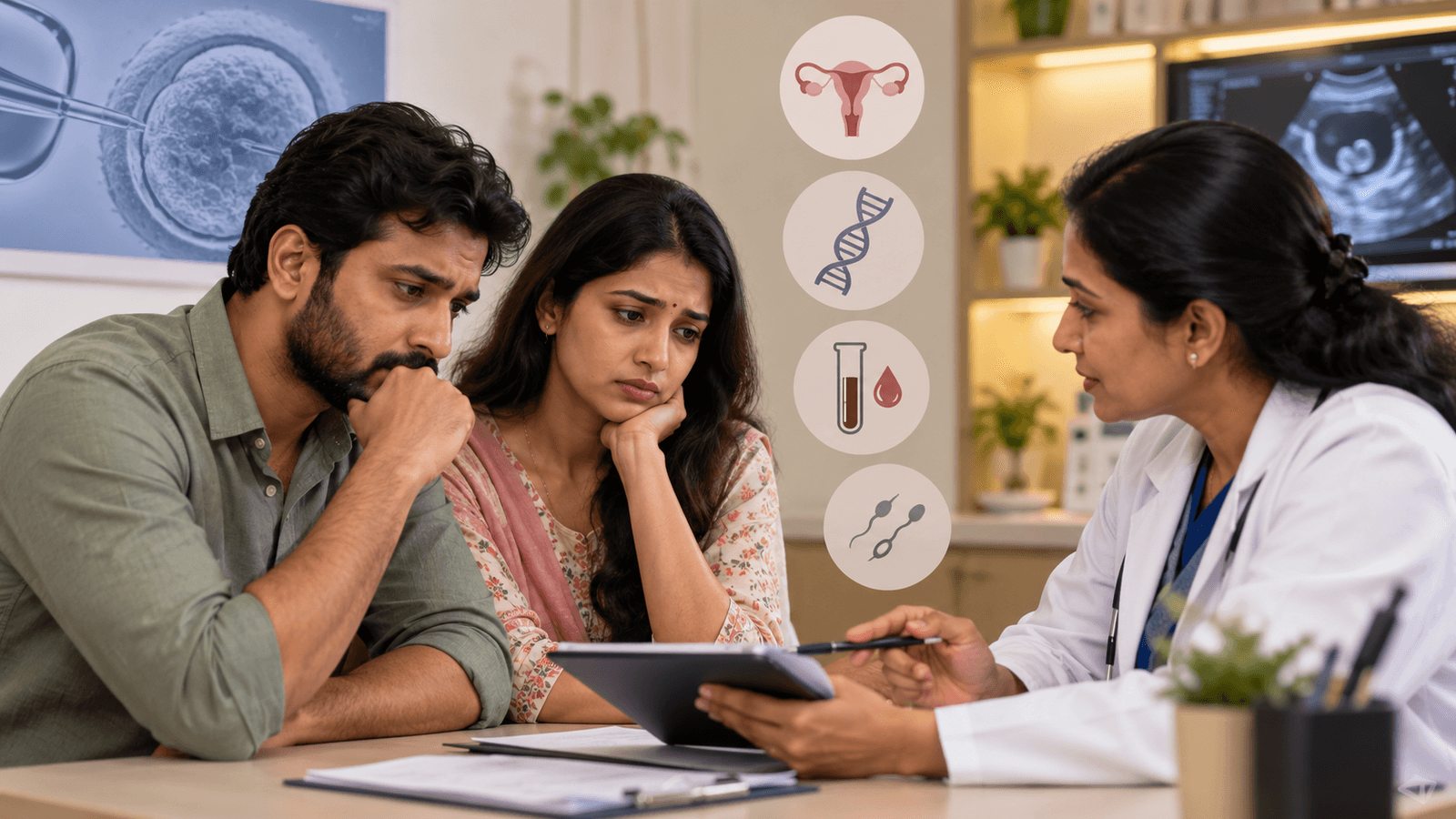
IVF Failed: What Should You Investigate Before Trying Again?
When an IVF cycle fails, the disappointment is felt in every corner of a family’s life. For women, it can feel like their bodies have betrayed them. For men, it can feel like they must stay strong even when they are hurting inside. Couples often describe this moment as a pause in time — a mix of grief, confusion, and fear about what comes next. Yet in reproductive medicine, a failed IVF cycle is not a dead end. It is a diagnostic opportunity. Understanding why the cycle failed can transform the next attempt into a more informed, more personalized, and often more successful journey.
Modern reproductive science shows that IVF outcomes depend on a delicate interplay of egg quality, sperm health, embryo development, uterine receptivity, hormonal balance, and metabolic stability. When even one of these elements is misaligned, implantation may not occur. Investigating these factors with clarity and compassion is the most important step before trying again.
Understanding Why IVF Fails: The Biological Reality
IVF failure is rarely caused by a single issue. Research published in Human Reproduction, Fertility & Sterility, and Reproductive Biology consistently shows that embryo implantation is influenced by dozens of variables. Sometimes the embryo may look perfect under the microscope but carry chromosomal abnormalities that prevent implantation. Sometimes sperm DNA fragmentation affects embryo development even when semen analysis appears normal. Sometimes the endometrium — the lining of the uterus — is not receptive at the exact moment the embryo needs to attach. And sometimes hormonal or metabolic conditions such as PMOS/PCOS disrupt the environment needed for successful implantation.
For couples, this complexity can feel overwhelming. But understanding these factors is empowering. It shifts the narrative from “IVF failed” to “IVF revealed something important.”
What to Investigate Before Your Next IVF Attempt
After a failed cycle, doctors often begin by reviewing embryo development in detail. Embryos that appear healthy may still have chromosomal issues, which is why many clinics consider PGT‑A (Preimplantation Genetic Testing for Aneuploidy) in subsequent cycles. This test helps identify genetically normal embryos with higher implantation potential. Time‑lapse monitoring can also provide insight into how embryos divide and grow, revealing subtle developmental delays that may affect success.
Sperm health is another critical factor. Even when semen parameters are normal, sperm DNA fragmentation may be elevated. Tests such as SCSA, TUNEL, or COMET can uncover hidden issues that influence fertilization and embryo quality. For men, this can be an emotional discovery — but it is also a powerful step toward improving outcomes.
The uterus itself must also be evaluated. A hysteroscopy can detect polyps, adhesions, or chronic inflammation that may interfere with implantation. Advanced tests like ERA, EMMA, and ALICE help determine whether the endometrium is receptive at the right time and whether the uterine microbiome is healthy enough to support embryo attachment.
Hormonal and metabolic factors play an equally important role. Thyroid imbalance, elevated prolactin, insulin resistance, and PMOS/PCOS can all affect egg quality, ovulation, and implantation. Addressing these issues before the next cycle can dramatically improve success rates. For many women, this phase of investigation feels like reclaiming control over their bodies — understanding the “why” behind their symptoms and cycles.
Finally, reviewing the IVF protocol itself is essential. Sometimes the stimulation medication, dosage, or trigger timing needs adjustment. Sometimes the lab conditions or culture media need to be reconsidered. IVF is not a one‑size‑fits‑all treatment; it is a highly individualized process that evolves with each cycle.
The Emotional Impact: A Shared Journey for Both Partner
IVF failure affects both partners deeply, even if they express it differently. Women often carry the physical burden of injections, scans, retrievals, and hormonal fluctuations. Men often carry the emotional burden of wanting to protect their partner while silently processing their own grief. Couples may feel disconnected, overwhelmed, or unsure how to support each other.
Studies show that emotional distress after a failed IVF cycle can influence sleep, hormonal balance, decision‑making, and readiness for the next attempt. This is why compassionate support — both emotional and informational — is essential. Understanding the science is important, but understanding your feelings is equally important.
How an IVF Counsellor Supports You After a Failed Cycle
An IVF counsellor helps bridge the gap between medical complexity and emotional clarity. After a failed cycle, many couples feel lost in terminology, overwhelmed by reports, and unsure what questions to ask their doctor. A counsellor helps you interpret your medical findings, understand advanced tests, and prepare for consultations with confidence. They help you identify gaps in your previous workup, explore whether additional investigations are needed, and guide you through the emotional recovery process.
Most importantly, a counsellor ensures that you never walk this journey alone. They help you rebuild hope — not blindly, but with informed strength.
Frequently Asked Questions (FAQ)
Why did my IVF fail even though my embryos looked good?
Embryo appearance does not guarantee chromosomal normalcy. Genetic issues may still exist.
Should I change my IVF protocol after a failed cycle?
Many patients benefit from protocol adjustments. Your doctor will decide based on your response.
How long should I wait before trying IVF again?
Most specialists recommend waiting one menstrual cycle, but timing depends on your medical evaluation.
Does stress cause IVF failure?
Stress does not directly cause failure, but it can affect hormones, sleep, and emotional readiness.
Should I do PGT‑A after a failed cycle?
PGT‑A may be recommended if you have recurrent failure, advanced maternal age, or unexplained issues.
Can PMOS/PCOS affect IVF success?
Yes. Metabolic imbalance can affect egg quality, ovulation, and implantation.
Is a failed IVF cycle a sign I will never conceive?
Absolutely not. Many women and couples conceive successfully after investigating the underlying cause.
A failed IVF cycle is heartbreaking, but it is not the end of your story. It is a moment to pause, understand, and rebuild with clarity. If you are ready to explore what happened, strengthen your next attempt, and receive compassionate guidance, begin with a post‑IVF review session or request a personalized fertility investigation checklist.
Your journey continues — with knowledge, support, and renewed hope.