Home / Blogs / Posthumous Reproduction in India: Why Cl...
← All Blogs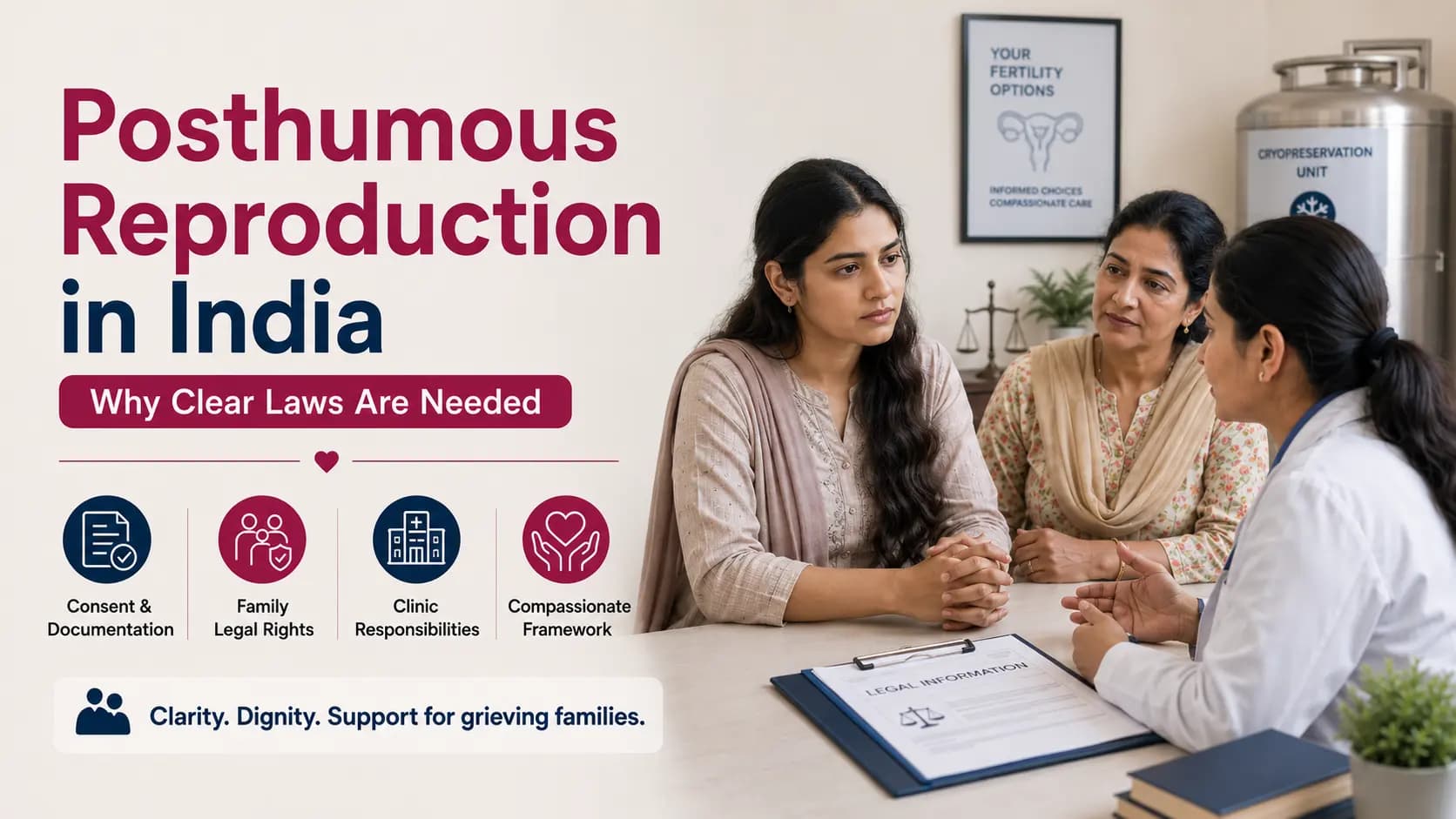
Posthumous Reproduction in India: Why Clear Laws Are Needed
Posthumous reproduction in India remains one of the most complex and emotionally sensitive issues in reproductive medicine. While medical technology has advanced significantly, legal and regulatory systems often struggle to keep pace with these developments.
Recent cases involving families seeking access to the frozen sperm of deceased loved ones have highlighted a significant gap in India’s reproductive laws. These situations raise important questions about consent, legal rights, medical responsibilities, and the emotional burden placed on grieving families.
The Challenge of Posthumous Reproduction in India
Despite advancements in assisted reproductive technology, India does not have a comprehensive framework specifically addressing posthumous reproduction. As a result, families often face uncertainty when attempting to access or use reproductive material after the death of a loved one.
In some cases, even when courts grant permission, practical challenges remain. Medical institutions may be reluctant to proceed due to the absence of clear legal protections and operational guidelines.
The Emotional Burden on Families
Families dealing with the loss of a loved one are already navigating grief and emotional distress. The lack of clarity surrounding posthumous reproduction can add further stress during an already difficult time.
Many families find themselves moving between legal authorities and medical institutions in search of answers. The uncertainty surrounding procedures, permissions, and responsibilities often prolongs emotional suffering.
Why Legal Clarity Is Necessary
The absence of a clear legal framework creates uncertainty for families, healthcare providers, and fertility clinics alike.
Important questions remain unanswered, including:
- Who can legally claim frozen sperm after death?
- Under what circumstances can it be used?
- What constitutes valid consent?
- What documentation should be required?
- What legal protections should be available to fertility clinics?
Without clear regulations, decisions are often made on a case-by-case basis, leading to inconsistency and confusion.
The Need for a Structured Framework
A comprehensive framework for posthumous reproduction should balance legal, ethical, and medical considerations. Such a framework could provide guidance for families while ensuring that healthcare providers operate within clearly defined legal boundaries.
Experts from reproductive medicine, law, ethics, and assisted reproductive technology could work together to develop policies that protect all parties involved and uphold the dignity of deceased individuals.
Moving Towards Compassionate Solutions
Posthumous reproduction is more than a legal issue. It is also a deeply human issue involving grief, hope, family, and reproductive rights.
Families should not be left to navigate uncertainty during one of the most difficult periods of their lives. Clear regulations can help reduce confusion and provide a more compassionate approach to handling these sensitive situations.
Looking Ahead
As conversations around reproductive rights, IVF advancements, and fertility preservation continue to evolve, posthumous reproduction deserves greater attention from policymakers and healthcare authorities.
Establishing clear legal guidelines can help ensure that families receive the clarity and support they need while enabling fertility clinics to act with confidence and responsibility. Addressing this gap is an important step toward creating a more compassionate and responsive reproductive healthcare system.