Home / Blogs / Surrogacy in India — A Complete Human-Ce...
← All Blogs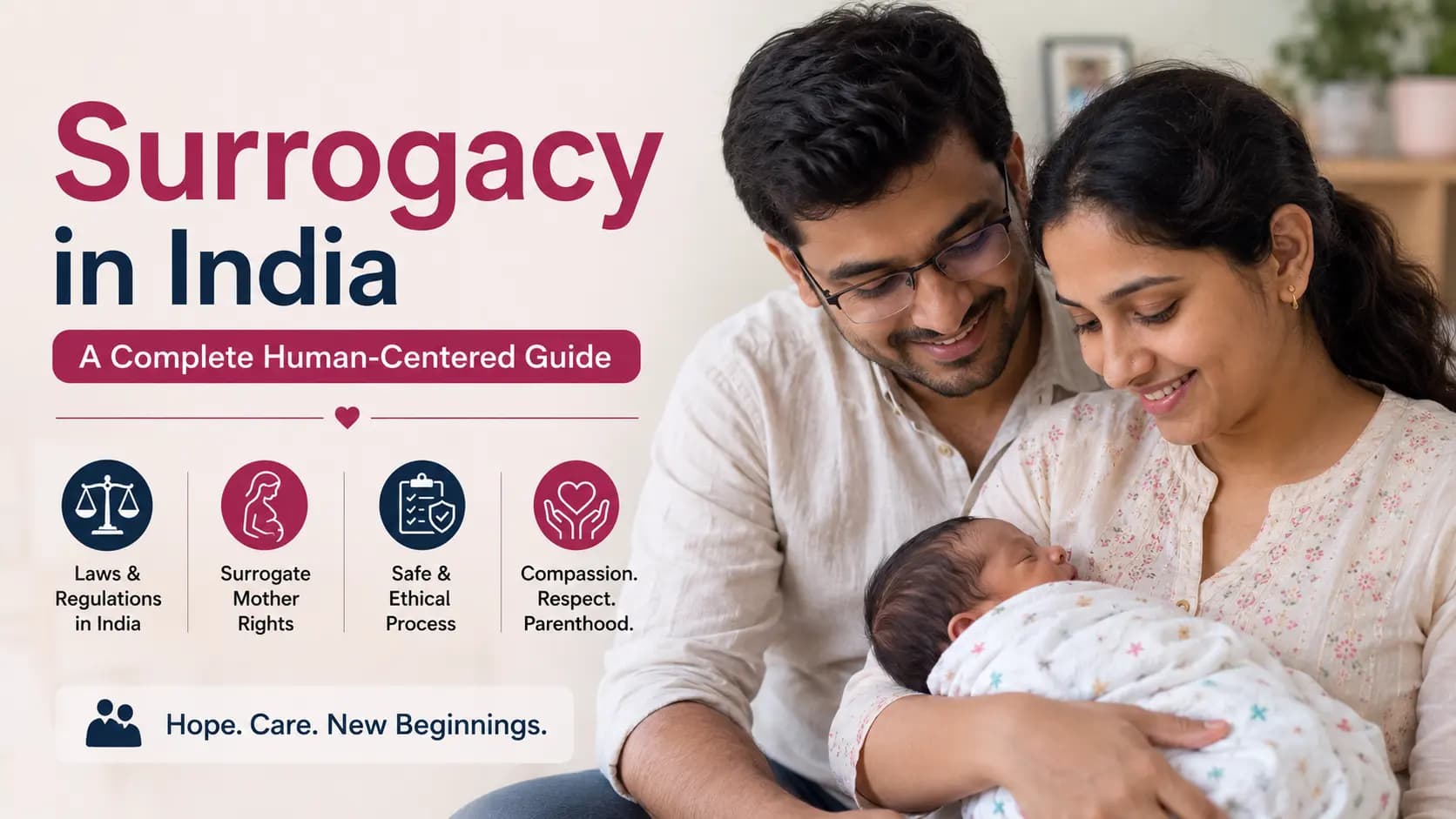
Surrogacy in India — A Complete Human-Centered Guide
Surrogacy in India is still spoken about softly — yet for many couples, it is not a shortcut or a luxury. Instead, it is the final, fragile bridge between heartbreak and hope.
As someone who supports families navigating infertility, I have seen the emotional weight this journey carries. Surrogacy is not just a medical process. In fact, it is a deeply human experience filled with courage, vulnerability, and resilience. This guide covers everything you need to know — from gestational vs traditional surrogacy to legal regulations and surrogate rights.
Gestational Surrogacy vs Traditional Surrogacy in India
Understanding the difference between gestational and traditional surrogacy is the first step toward making an informed decision.
In gestational surrogacy, the surrogate carries an embryo created via IVF. She has no genetic link to the child. Moreover, it is the most widely accepted and legally permitted form in India. In traditional surrogacy, however, the surrogate’s own egg is used, making her genetically related to the baby. It is performed via IUI and is not legal in India due to emotional and legal complexities.
Therefore, gestational surrogacy is the only legally recognised form in India and is considered safer for all parties involved.
Surrogacy Process in India — Step by Step
The surrogacy journey follows a structured timeline. Furthermore, understanding each stage helps reduce anxiety and sets realistic expectations. The typical journey includes:
- Medical evaluation of intended parents
- Legal counselling and documentation
- Matching with a surrogate
- Medical and psychological screening of the surrogate
- IVF cycle and embryo creation
- Embryo transfer process
- Pregnancy monitoring and support
- Birth and legal parenthood handover
In most cases, surrogacy journeys in India take 12 to 18 months, depending on medical and legal factors.
Surrogacy Laws in India — What You Must Know
India permits only altruistic gestational surrogacy under the Surrogacy (Regulation) Act, 2021. Additionally, key legal requirements include:
- Only married Indian heterosexual couples married for 5 or more years
- Doctors must certify the couple as medically infertile
- The surrogate must be a married woman with her own biological child
- No commercial surrogacy is allowed
- Foreign nationals, single parents, and live-in partners are not eligible
Altogether, these laws aim to protect surrogate mothers, prevent exploitation, and ensure ethical practices across the board.
Surrogate Mother Eligibility Criteria
A surrogate must meet strict medical and psychological standards. Specifically, eligibility criteria include:
- Age between 25 and 35
- Healthy BMI
- At least one biological child
- No more than one previous C-section
- Physically and mentally fit
- Must pass a psychological evaluation
- Must not financially depend on surrogacy
What Is Altruistic Surrogacy?
Altruistic surrogacy means the surrogate receives no payment beyond medical expenses, insurance, and pregnancy-related costs. In other words, it is rooted in compassion, not commercial gain. Furthermore, it is the only legally permitted model in India.
Ethical Considerations and Legal Rights in Surrogacy
Ethical surrogacy prioritises bodily autonomy, transparent communication, informed consent, and protection from exploitation. In addition, the rights of the child and the emotional well-being of the surrogate are equally important.
Surrogates have the right to safe medical care, health insurance, informed consent, dignity, and privacy. Moreover, the law protects them throughout the entire process. As a result, surrogacy in India remains humane and respectful.
Guide for Intended Parents
Intended parents should be well-informed about the surrogacy cost breakdown, legal responsibilities, and emotional readiness. Additionally, knowing how to choose a surrogate, what questions to ask during matching, and how to prepare for parenthood through surrogacy makes the journey smoother and less overwhelming.
Frequently Asked Questions About Surrogacy in India
Which surrogacy type has higher success rates?
Gestational surrogacy has higher success rates because IVF gives doctors better control over embryo creation.
How long does the surrogacy process take?
Typically, it takes 12 to 18 months.
Can I be a surrogate with PCOS?
Often yes, provided you are medically stable.
Can a surrogate mother change her mind?
Under Indian law, once both parties sign the agreements, she cannot change her decision.
Is surrogacy ethical?
Yes, when doctors, lawyers, and families handle it transparently — with full consent and protection — surrogacy can be ethical and empowering for everyone involved.