Home / Blogs / IVF Errors Aren’t Accidents — They’re Sy...
← All Blogs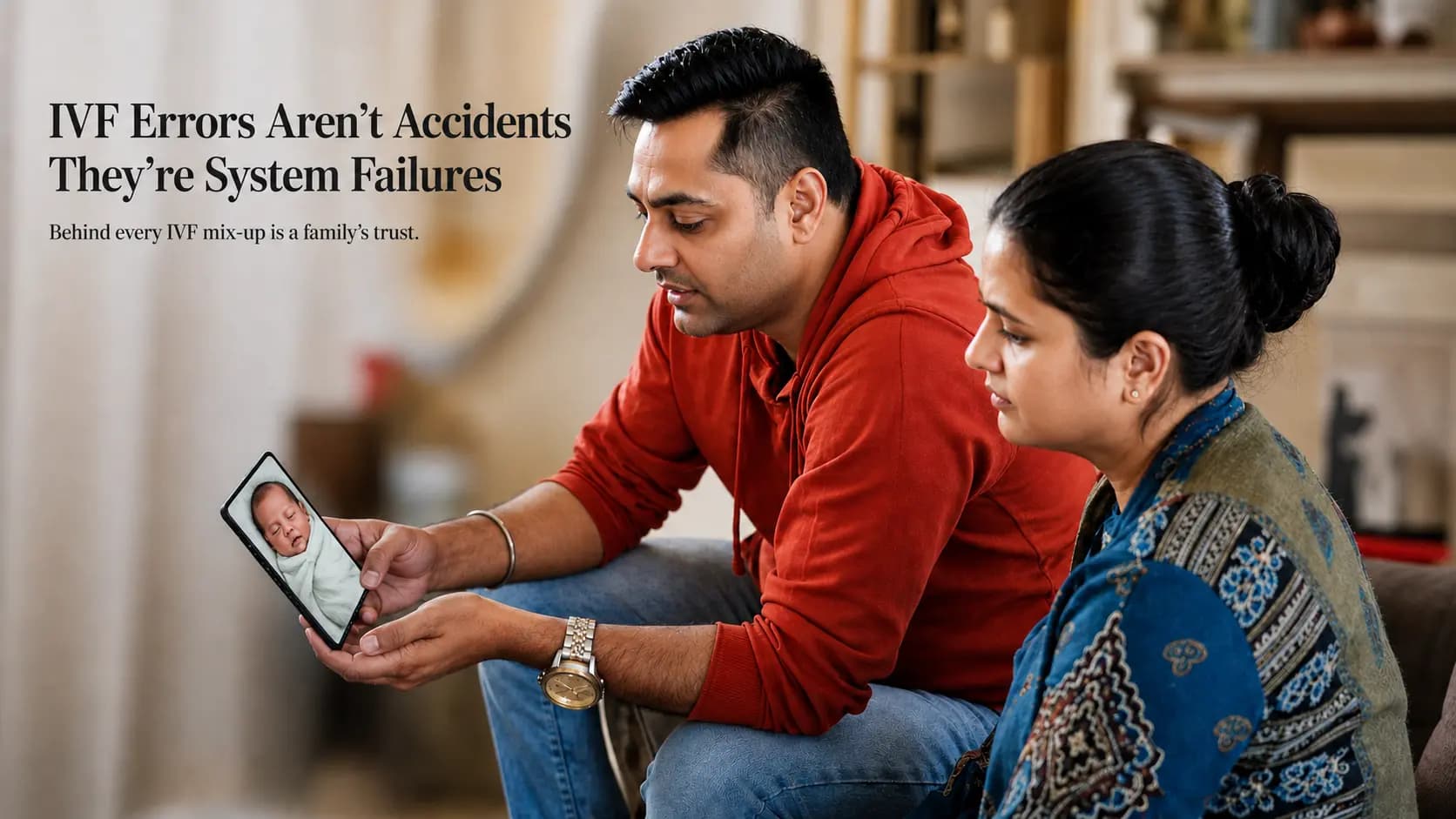
IVF Errors Aren’t Accidents — They’re System Failures
Every time an IVF mix‑up makes headlines, we react with shock. But the real question we should be asking is: How does something this devastating even happen inside a medical facility that handles the most delicate, irreplaceable part of a person’s life — their embryos?
This isn’t about one clinic or one couple. This is about a system that has allowed cracks to widen into canyons.
IVF clinics are not factories. They are not assembly lines. They are custodians of people’s deepest hopes — often after years of infertility, loss, financial strain, and emotional exhaustion. When a clinic mishandles embryos, it isn’t “an error.” It is a violation of trust at the highest human level.
So how do such catastrophic mistakes happen?
Because standards are inconsistent. Oversight is weak. Protocols vary wildly. And some centres operate with shocking casualness toward procedures that should be sacred.
Because any clinic that treats embryo handling like routine paperwork is already failing its patients.
Because when profit grows faster than ethics, negligence becomes a silent partner.
And because governing bodies often step in only after the damage is done, instead of enforcing strict, non‑negotiable systems that prevent such tragedies in the first place.
Let’s be honest — families don’t walk into IVF clinics with suspicion. They walk in with trust, faith and the last pieces of their emotional strength.
And when a clinic betrays that trust, the emotional fallout is indescribable.
Imagine waiting for years, painful injections, procedures, loans, prayers and finally holding your child, only to be told the child isn’t yours.
This is not just a “mix‑up.” This is trauma. This is identity-shattering grief. This is a lifetime of emotional conflict no parent deserves.
So what needs to change?
1. Mandatory, uniform chain‑of‑custody protocols for embryos
Barcode systems, double‑verification, CCTV-monitored labs — not optional, not “recommended,” but compulsory.
2. Independent audits of IVF centres
Not self‑reported compliance. Not paperwork. Actual audits by neutral bodies.
3. A governing authority with real power
Not advisory committees. A regulatory body that can suspend licences, impose penalties, and enforce standards.
4. Patient awareness and empowerment
Couples must know:
- What protocols does the clinic follow
- How embryos are labelled and tracked
- Who has access to the lab
- What safety systems are in place
Transparency should be a right, not a favour.
5. Zero tolerance for negligence
If a clinic can’t safeguard embryos, it shouldn’t be allowed to operate. Full stop.
Because IVF is not just science. It is emotion, identity, family, and future — all held in a petri dish.
And any clinic that treats that responsibility lightly is not just unethical. It is dangerous.
As a society, we cannot allow “errors” of this magnitude to be normalised. As professionals, we cannot stay silent. As humans, we cannot ignore the emotional devastation these families endure.
It’s time to stop reacting to tragedies and start preventing them.